
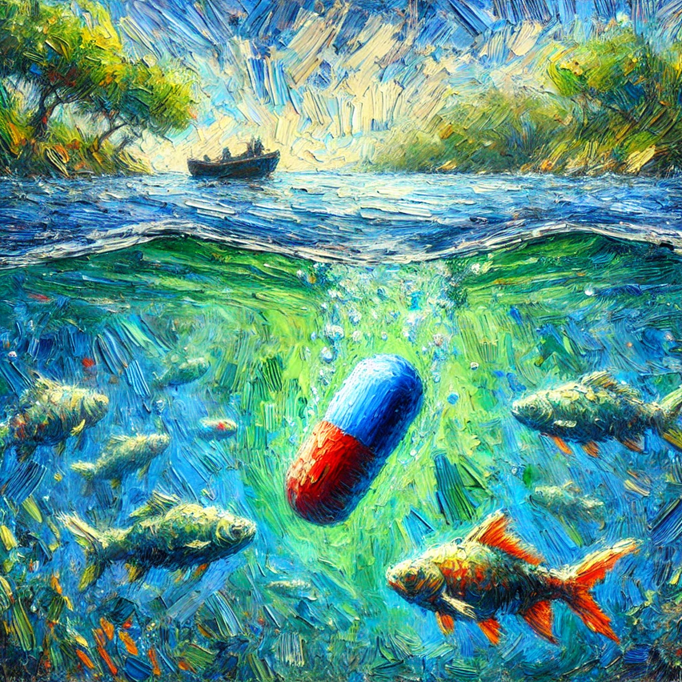
Where do our prescriptions go after we throw them away? What impact do prescriptions for people and animals have on the environment through their creation, distribution, use, and disposal? Here, I’ll present a detailed exploration of this hidden and overlooked sustainability concern using scientific studies and their moral/societal implications for us and our earth.
“We have forgotten how to be good guests, how to walk lightly on the earth as its other creatures do.”
-Barbara Ward, Environmentalist

Drug Abuse: A Driving Force in Pharmaceutical Pollution
More than 4,000 medicines are routinely prescribed to maintain our health in 2025. We also provide prescriptions for pets and farm animals. Although a large amount of these prescriptions are doing great things for our health and well-being, the industry surrounding them doesn’t have the best track record in the public eye. Let’s take a look at why this is.
I’m sure you’re aware that drug addiction is a serious issue everywhere in the U.S. It impacts big cities and small towns alike: young children, teens, adults, and the elderly all suffer from drug addiction in large quantities.

As of 2023, over thirty-seven million people in the U.S. were confirmed to use drugs on a regular basis, meaning that they had used drugs in the past thirty days (and will likely use in the following thirty days.) This excludes doctor-approved medical use but includes the use of prescription drugs outside of what’s directed. The majority of drug abusers used marijuana, opioids, other prescription painkillers, and prescription stimulants. To a much lesser extent, they also used hard drugs like methamphetamine, cocaine, and LSD. So, why does this matter to large pharmaceutical companies? Why does it matter to us?
Pharmaceutical companies sell drugs to the public using doctors who prescribe them. These drugs aren’t only recommended by doctors. They are also pushed on us through television ads, online marketing, and more. Drug abuse is bad for people, and it allows more harmful substances to flow freely through our bodies, pets, food, land, waste, everything. Harmful substances need to be more carefully contained if we want to see improvement in sustainability from society as a whole.
Injustice: A Nasty Side Effect of a Pill Polluted Populace

Many people accuse ‘big pharma’ of exploiting vulnerable people by manipulating the prices of drugs for extra profit, which has famously caused many Americans living with diabetes to lose everything for their insulin or die. From my research, I’ve stumbled upon a lot of unethical business and law practices around the drug industry. This supplies proof that pharmaceutical corporate entities can provide a health service without holding public health as a number one priority.
For instance, despite recent government and corporate efforts to cap insulin copays intended to improve affordability, insulin manufacturers still hold considerable power in determining retail prices. These private companies, controlling over 90% of the insulin market in the United States, have historically influenced insulin pricing significantly, which has often negatively impacted diabetics. This ongoing control underscores the need for greater transparency and regulatory intervention.
By looking at this case and others like it, we can learn to be skeptical of drug companies’ intentions when it comes to providing their service, and apply that thinking to the potential environmental issues they perpetuate.
This piece from the Federal Trade Commission outlines some of the unethical business practices that take place in the pharmaceutical industry by means of a scathing court case. It discusses the extreme inflation that has taken place over the past thirty years to bring us where we are now, and how competition between these private drug companies (along with other factors) has caused prices to skyrocket.
Water Pollution: The Outcome of the Wrong Way to Treat the Environment

Here is a page on a U.S. government website that outlines the details of a study performed between 2004 and 2009. This study confirms significant water pollution from prescription drugs, most heavily around where the manufacturing plants are. This webpage contains a link to the actual data from the study along with some important information on the functionality of prescription drugs. It also provides details on the tricky ways drugs make their way through our ecosystems and cause pollution, which I’ll outline here:
- Wildlife like birds take in discarded drugs while feeding in landfills, and then transfer these substances to anywhere they defecate, including in the soil and farmland we use to grow food. Drugs given to livestock also enter the environment through this same way.
- Drugs in our livestock and other animals can cause serious health problems and death for scavengers like vultures that eat dead animals.
- Remnants of drugs that have passed through human bodies find their way into our water and can freely pass through most sewage and water treatment facilities.
- The water from these facilities is often used to fertilize or irrigate farmland. This is adding more drugs to the cycle.
Drugs in the water go on to infect aquatic plants, fish, birds, and more as they continue to make their way through the entirety of the food chain.
Action: How to Fight Drug Abuse and Pharmaceutical Waste in Your Community

With that being said, here’s what you can do to combat both drug abuse and pharmaceutical water pollution:
1. Dispose of Old Prescriptions Properly
(BEST METHOD) – Drop them off at your local drug take-back location.
(ACCEPTABLE) – Throwing them away in a sealed bag or container mixed with something inedible like dirt or coffee grounds. This prevents your drugs from making their way into the watershed or into the mouth of a person or animal that might find them.
(DO NOT) – Flush drugs down the drain or toss them directly into the trash. Disposal in this way is almost a guarantee that the pollution will impact our fresh water and ecosystems.
2. Support Those in Your Life, Whether They Struggle with Drugs or Not
Addiction can be hard to spot and hard to manage. By keeping our eyes out on our friends and family, we can stop drug addiction before it starts. This will keep our people and The Earth healthy.
3. Educate
Everyone that I’ve talked to about this issue so far has been in the dark. Although a lot of us are aware of (and believe in) the concepts of pollution and climate change, it’s important to actually consider the environmental implications of unused prescription drugs. It’s our job to spread this information and create a community bound by knowledge!
4. Support Non-Profit Organizations that Strive to Combat Drug Use or Promote Drug Regulation, Thus Opposing ‘Big Pharma’
Some of these non-profit organizations include Faces and Voices of Recovery, Drug Awareness Foundation, and Shatterproof. These organizations are primarily focused on helping drug users work toward a more healthy and safe reality, which helps the earth along with it!
Final Thoughts
The link between drug abuse, the economic side of drugs (like production and distribution), and environmental pollution is closer than we think. I hope that this article has allowed you to look at the different sides of this multifaceted issue and develop an understanding of this link, and what it is we need to do to help the Earth and the people impacted by our nation’s complicated relationship with drugs.
Further Reading
Why Self Care and Exercise are Inherently Earth-Friendly
Open Source as the Foundation of a Sustainable Paradigm
The Future for Sustainability in Transportation






Leave a Reply