
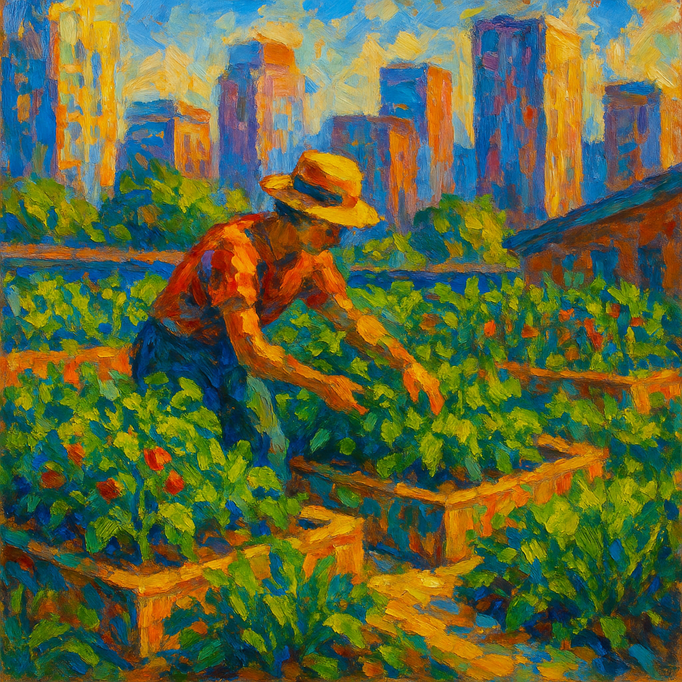
A green revolution is underway in cities and it’s affecting virtually every aspect of modern living to keep up with the unprecedented urbanization taking over urban spaces. Gardening too has come a long way from being a leisure activity to its current form where it is rapidly transforming urban landscapes.
With more than half of the world’s population living in urban areas, urban gardening is led by a desire to renew the role of nature in our lives in new and ingenious ways so that sustainability and modern living can go hand in hand. Let’s explore some of the coolest innovations that have arrived in the urban gardening world to make cities greener and more productive than ever.
“To Plant a garden is to believe in tomorrow.”
-Audrey Hepburn
1. Vertical Farming
As space becomes a premium in highly congested cities, the only solution is to look upwards. Vertical farming is no longer futuristic but fast making its way into urban food production. A glowing example of vertical farming is the indoor vertical farms in New Jersey that rely on aeroponic techniques to grow plants -without soil and using 90% less water than traditional farming.
This magnifies the yield up to 390 times higher per square foot while bringing food closer to customers. There is also an aesthetic aspect to it that not only beautifies the architecture but further helps to bring down city temperatures and improve air quality.
2. Smart Garden Technology
AI has paved the way for smart gardens that use AI-powered technology, such as sensors and automated watering systems, to provide the most optimum environment for gardening. This means that you no longer have to fret over deciding the right temperatures or monitoring soil conditions by yourself, as AI does it all to ensure your plants grow to the fullest.
It works best for small apartments where light is limited and requires minimal maintenance to begin with. A perfect solution for urban dwellers with busy lifestyles who wish to experience the luxury of growing fresh food without soil or sunlight.
Related Post: FarmBot: Solution to Big Agriculture? – Green Villager

3. Farms on Rooftops
The image of city rooftops as barren and empty spaces is a thing of the past. Comprising 15-35 % of cities’ unused space as per certain estimates, rooftops offer a fantastic opportunity to integrate vibrant green spaces into urban areas. These revamped rooftops are multi-purpose- they reduce urban heat, tackle air pollution, and, above all, provide a space to grow fresh produce.
They further act as a shield to ward off the scorching summer temperatures. Research studies have shown that a green rooftop can reduce median surface temperature between 28- 30 °C, in hot–humid conditions. Strategically grown landscape plants also help to insulate buildings naturally and can bring down the costs of air-conditioning by nearly 25%.
4. Community Gardens
If there is one thing that unites us all, then it is love for good food and the booming community gardens are a living proof of that. As organic food turns from a fad into a conscious voice, these community gardens have become a go-to resource to access fresh food without traces of any chemicals. In fact, gardening has become a shared endeavor as people utilize shared spaces and turn them into food-producing hubs.
The driving force behind community gardens is to reclaim underutilized lands and use them for growing sustainable food like the Los Angeles’ South Central Farm. Not only do community gardens help build healthier, eco-conscious communities, they go a long way to strengthen food security.

5. Hydroponic Window Gardens
Imagine you have just prepared your favorite pasta, and you have fresh herbs growing at an arm’s distance. This is what Hydroponic Window Gardens are all about- a modern version of farm-to-table but much faster. Mounted on your windows, hydroponic systems make it possible to grow food within apartments all year round while replacing soil with nutrient-rich water solutions.
To top it off, Water usage is 90% less than conventional gardening, making it a convenient way to grow healthy, pesticide-free food. Busy urbanites couldn’t have asked for more than a smart garden where everything is on auto mode – from light and water to nutrient delivery so that they can indulge in fresh produce right within their homes.
6. Guerrilla Gardening
True to its name, guerilla gardening has a rebellious spirit that eschews modern technology and instead relies on individual actions to drive change. The center of its focus is vast swathes of neglected spaces in urban areas and transforming them through gardening, albeit without legal permission. It is essentially a grassroots approach that leverages unauthorized power to stimulate an urban renewal similar to the now-transformed vacant lots in Detroit.
So much for the dictum -illegal means for a noble purpose. Guerilla gardening is epitomized by groups like Green Guerillas in New York City which started out as a renegade group and later established itself as a non-profit to support the growth of 600 community gardens.
7. Underground Farming
Agriculture has traditionally used fertile land surfaces for growing crops but urban farmers are taking it a step further by looking below ground. The idea is to repurpose underground space for farming be it basements, bunkers, or abandoned subway tunnels rather than setting up new infrastructure.
These underground spaces are deprived of natural sunlight but innovation has made gardening possible in the most extreme urban environments. This is well-illustrated by London’s Growing Underground project where LED lights and hydroponics are used to cultivate all kinds of green, herbs, and leafy vegetables even with no light. The best part is that it uses less water and requires no pesticides at all while allowing urbanites to benefit from naturally grown food.
Conclusion
Urban gardening is not just a trend but a purposeful movement that is here to stay as sustainability becomes a cornerstone of modern urban life. Urban gardening isn’t simply about growing food but transforming urban landscapes into healthier, green areas where nature reigns supreme. By embracing these cool innovations, modern cities are gearing up to welcome a sustainable future for themselves and generations to come.
Whether you are living in a city with a small balcony or participating in a local initiative to transform your neighborhood, you too can embark on your urban gardening journey to cultivate crops and hope for a brighter, green future. If you are passionate about sustainability and interested in delving into eco-friendly practices, take a look at our sustainability-oriented blogs for more such content.






Leave a Reply