

You have probably heard the term “microplastics” before. Maybe it came up in a news article or on the back of a shampoo bottle claiming to be “microbead-free.” At first glance, these tiny plastic particles might not seem like a big deal. After all, they are practically invisible. But the truth is, they are everywhere. From Arctic snow to the bottom of deep-sea trenches, from tap water to human bloodstreams, microplastics have gradually and subtly made their way into almost every nook and cranny of our world and our bodies. And that brings a massive question to the table: Can we actually eliminate them?
What Exactly Are Microplastics?
Microplastics are tiny pieces of plastic that are smaller than 5 millimeters long. Some are designed to be that small, like microbeads in cosmetics, while others are formed by the slow degradation of larger plastic objects. Water, wind, and sunlight break down plastic bottles, bags, and other plastic trash into smaller fragments over time.

Image Source: Freepik
There are two main types:
- Primary microplastics are intended to be small. They consist of such items as microbeads in exfoliants, industrial pellets (known as nurdles), and synthetic fibers that are released from clothing when it is washed.
- Secondary microplastics form as larger plastic items break down with time because of exposure and mechanical wear.
Regardless of how they are created, they do not just go away. Rather, they accumulate in ecosystems and inside of us.
How Did Microplastics Get Everywhere?
Plastic has transformed modern living as it provides cheap, durable, and lightweight materials for anything from packaging to electronics. Yet, the same properties that make plastic so convenient render it incredibly persistent. After it is dumped, plastic can take hundreds and often thousands of years to completely break down. Rather than biodegrading, it simply turns into fragments.
With more than 350 million tons of plastic being made each year globally, and much of it being dumped after one use, it is no surprise that microplastics are now found in virtually every environment. They flow down waterways, ride ocean currents, drop with rain, and catch a ride on the wind.

Image Source: Freepik
Clothes made from synthetic fabrics such as polyester and nylon release tiny fibers with each wash. They release billions of them in just one load. Car tires, constructed in part from synthetic rubber, deposit microscopic trash as they wear away on roads. Simply opening a plastic bottle can emit microplastic particles into the air.
It is not only an environmental concern anymore but also a human one as well.
How Microplastics Affect Us
Microplastics have been found in food, water, air, and even human tissue. Microplastics were identified in the blood of 80% of participants tested in a study conducted in 2022. That means that it is coming into our bodies, and we still do not know the full long-term health effects.
Recent studies have shown that the consumption of microplastics might result in inflammation, hormone interference, and even a heightened cancer risk because of the chemicals used during plastic production. A few of the particles are small enough to pass through cell membranes and can potentially interfere with cellular integrity or alter standard biological functions.
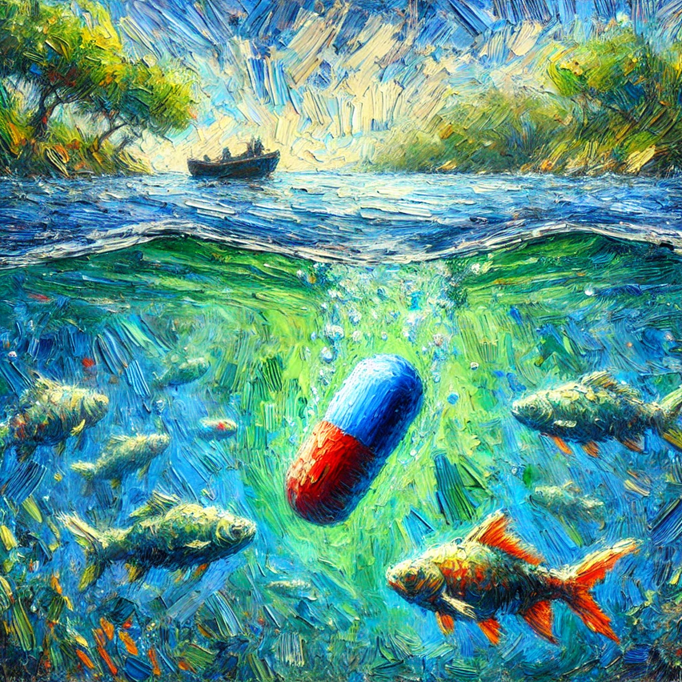
In marine ecosystems, animals tend to confuse microplastics for food. Small fish, plankton, seabirds, and even whales at times ingest plastic in place of nutrients. Plastics obstruct digestion, cut down on energy intake, and pass on toxic chemicals up the food chain, ending up on our plates as “nutritious food”.
Can We Get Rid of Microplastics?
Here is the tough reality: There is no quick solution to this problem. Microplastics are very hard to clean up from the environment due to their small size, popularity, and capacity to spread over vast distances. But that does not make us powerless in any sense.
1. Improving Waste Management
One of the best ways to reduce the production of microplastics is by controlling plastic waste at the source. Developing countries tend to have poor waste infrastructure and often dispose of plastics in rivers and oceans. These break down over time, causing issues for years to come.
Investing in better waste collection, recycling infrastructure, and landfill controls can prevent macroplastics from becoming microplastics. Certain areas are already using “zero-leakage” waste systems that aim to keep plastic out of the environment entirely.
2. Regulating Microplastic Sources
Legislation has the potential to significantly slow down microplastic pollution. Several nations have already prohibited microbeads in cosmetics. The European Union has set forth far-reaching rules to prohibit intentionally added microplastics in cosmetics, cleaning agents, and fertilizers.
Within the textile sector, manufacturers are coming under increasing pressure to produce fabrics that release fewer fibers and to engineer washing machine filtration systems. For example, France requires new washing machines to install microfiber filters by 2025.
3. Innovative Cleanup Technologies
Although the extraction of current microplastics from oceans and soils is complicated, different technologies are being pursued to solve the issue. Some researchers are trying magnetic nanomaterials that can adsorb microplastics and remove them from water. Others are using natural filtration systems, such as bio-based membranes and sand filters, to catch microplastics during wastewater treatment plants.
There is even current research on microbes and enzymes that are capable of degrading specific plastics at the molecular level, but this is yet in its early stages and not yet scalable for cleaning up the environment.
4. Consumer Awareness and Action
Consumers are stronger than they realize. By being thoughtful in their purchasing decisions, people can do a lot to lower the emission of microplastics into the environment. Below are some actions that count:
- Ditch synthetic fibers such as polyester, nylon, and spandex for natural ones like cotton, linen, and hemp.
- Use microfiber washing bags or washing machine filters to catch synthetic fibers.
- Cut down on single-use plastics like packaging, straws, and plastic bags.
- Select personal care products that have the label “microplastic-free.”
- Dispose of plastic waste correctly and encourage local recycling.
Nobody can do it all, but small changes in behavior, when taken up by many, do stack up to make a major development.
Are There Alternatives to Plastic?
In recent years, the movement to replace plastic has gained momentum. Bioplastics, compostable packaging, and plant-based materials are appearing in everything from supermarkets to technology devices. However, these alternatives have their own compromises.
For instance, most biodegradable plastics need to be composted in industrial facilities to decompose. Unless a proper disposal mechanism is in place, they tend to act exactly like normal plastic in landfills or oceans. A few alternatives also have a larger carbon price tag or fight over land for food crops.
Of course, the rise of circular economy systems where products are designed to be reused, fixed, or redesigned provides a more sustainable way forward. Cutting back overall on our dependence on plastic as opposed to merely substituting it with another material is perhaps the more successful long-term solution.
Where Do We Go From Here?
Microplastics may be here to stay, but their effect does not have to be. Now, it is not just a matter of eliminating what is already present, it is about stopping the flow at the origin. That involves re-examining how we make, use, and get rid of plastic at every point: individual, industrial, and institutional.
Scientists, policymakers, companies, and citizens must all do their part. Even though we will likely never be able to vacuum up microplastics from the furthest reaches of the planet, we can slow their spread, reduce their damage, and insist on systems that value the environment over convenience.
Progress or change won’t happen overnight. But it begins with seeing the problem and not turning a blind eye just because it is tiny. If you want to keep up with more news just like this, or care about the planet as we do, head over to Green Villager for more just like this!





Leave a Reply