
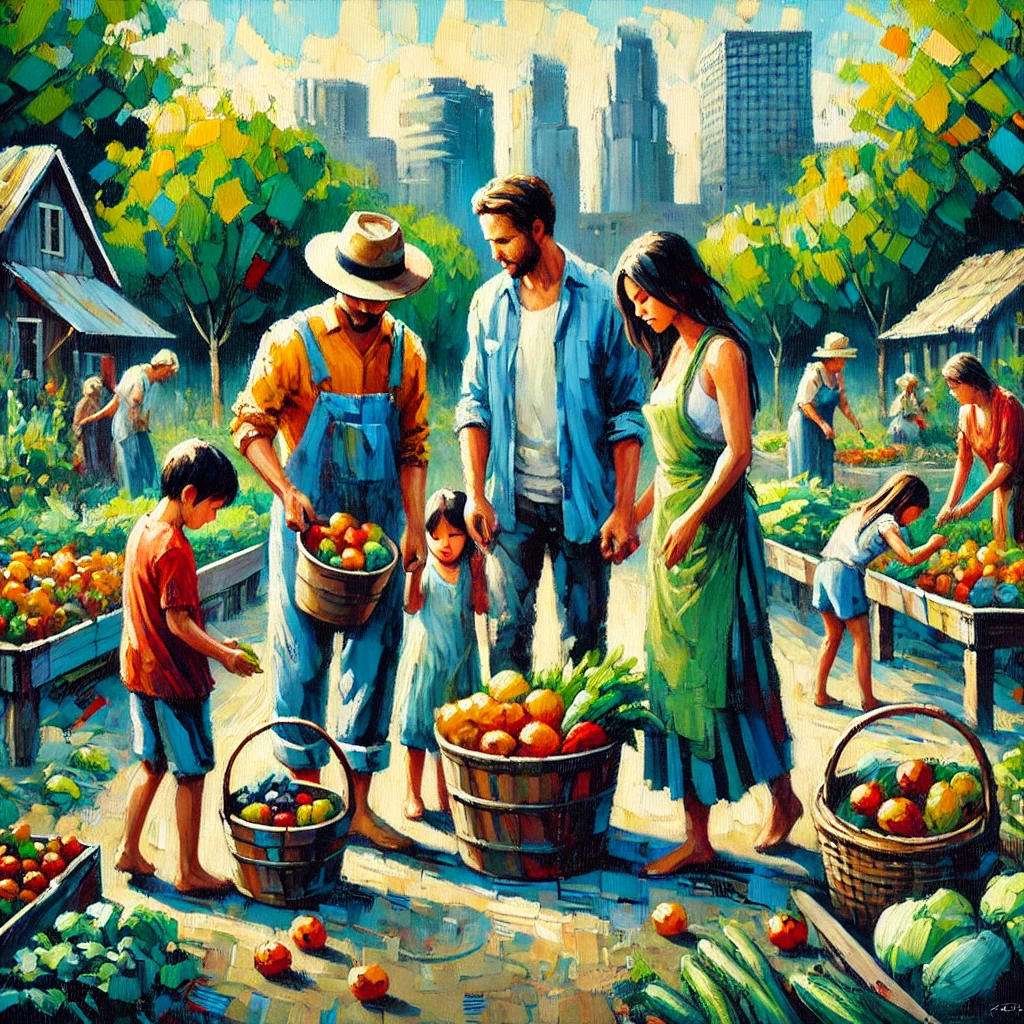
Have you ever wanted to grow a garden or nurture fruit trees but find yourself saying “who has the time…?”. Gleaning—the ancient yet profoundly relevant practice of sharing surplus food—could be the answer. Whether it’s neighbors harvesting unpicked apples from a backyard tree or sharing garden-fresh zucchini, gleaning is about transforming untapped abundance into meaningful connections. It’s a chance to fight waste, support community, and ensure that no resource goes unused. By embracing this timeless tradition, we turn excess into opportunity, celebrating the shared wealth within our neighborhoods and strengthening the bonds that unite us.
What Is Gleaning?
Gleaning dates back to biblical times and has been a part of agricultural communities for centuries. For a detailed historical perspective, see this article on gleaning history. Traditionally, it was seen as a way to support the less fortunate, allowing them to gather what was left behind after the primary harvest. Today, gleaning is practiced by volunteers, nonprofit organizations, and even municipalities to redistribute surplus food that would otherwise go to waste. By salvaging this food, gleaning helps combat both hunger and the environmental impact of wasted resources.
The Large-Scale Sustainability Angle
From a sustainability perspective, gleaning offers a direct solution to two major challenges: food waste and resource efficiency. Globally, despite millions of people fighting food insecurities, an estimated ONE BILLION MEALS per day are wasted, representing a significant loss of water, energy, and labor. Gleaning helpes ensure that edible crops left in fields—due to market rejection, overproduction, or cosmetic imperfections—are utilized rather than discarded.
By diverting food from landfills, gleaning also reduces methane emissions, a potent greenhouse gas released as organic matter decomposes. Additionally, the practice minimizes the need for additional agricultural production, conserving land and reducing the strain on ecosystems.
Building Community Through Gleaning
Gleaning is as much about people as it is about food. It brings together volunteers from all walks of life, creating opportunities for collaboration and mutual support. These community-driven efforts often involve partnerships between farmers, food banks, and local organizations, demonstrating how collective action can address shared challenges.
How It Works

Gleaning often operates with a collaborative system involving volunteers, homeowners, and charitable organizations. A common practice is to divide the harvest into thirds: one third is donated to charity, one third is retained by the homeowner, and one third is shared among the gleaners. This approach ensures fairness, promotes generosity, and fosters a sense of community among participants.
Volunteering for a gleaning initiative is a hands-on way to engage with sustainability while deepening your connection to food sources. Participants gain firsthand experience of the agricultural process, learning about the hard work that goes into growing crops and the importance of reducing waste. For many, this connection inspires greater mindfulness in their consumption habits.
Moreover, gleaning reinforces the value of abundance. Instead of focusing on scarcity, it highlights the generosity of the earth and the potential for sharing resources equitably. Communities that embrace gleaning often experience a ripple effect, with stronger bonds and a greater sense of mutual accountability.
Gleaning and Food Security

In many parts of the world, food insecurity remains a pressing issue. Even in affluent countries, countless individuals and families struggle to access nutritious meals. Gleaning addresses this gap by redirecting surplus food to those in need, ensuring that no harvest goes to waste.
Organizations like the Society of St. Andrew in the United States and Feedback Global in the UK have established networks to facilitate gleaning. These groups work with farmers to organize gleaning events and distribute the collected produce to food banks, shelters, and other community resources. Such initiatives not only provide immediate relief but also highlight the systemic inefficiencies in food distribution that can be addressed through grassroots action.
Modern Gleaning Practices
While the concept of gleaning remains rooted in tradition, modern technology and logistics have expanded its potential. Mobile apps, social media, and data-driven platforms make it easier than ever to coordinate gleaning efforts, connect volunteers with farmers, and track the impact of these activities. Apps like OLIO and Food Rescue US help bridge the gap between surplus food and those who can use it.
These platforms create virtual marketplaces where farmers can list unharvested crops, and volunteers or organizations can step in to glean and distribute them. By leveraging technology, gleaning is becoming more accessible and scalable, enabling broader participation.
How to Get Involved in Gleaning

If you’re interested in contributing to a sustainable future through gleaning, here are a few steps to get started: Check out The National Gleaning Project for resources and opportunities.
Join a Local Gleaning Group
Many communities have established gleaning initiatives. A quick online search or inquiry at a local food bank can help you find opportunities nearby.
Start Your Own Local Gleaning Group
Anyone can start a gleaning group. Whether you’re looking to volunteer or offer fruit from the tree in your backyard, put it out there and start reaching out to your local friends and farmers.
Partner with Farmers
Reach out to local farmers to see if they have surplus crops that could be gleaned. Many are happy to support gleaning efforts, especially if it helps reduce waste and supports their community.
Volunteer Your Time
Whether you’re collecting produce or helping with logistics, your contribution can make a significant impact.
Raise Awareness
Share the concept of gleaning with friends, family, and social networks. The more people know about it, the greater the collective effort can become.
Support Organizations
Donate to or volunteer with nonprofits dedicated to gleaning. These groups often have the infrastructure and experience needed to maximize the practice’s benefits.
Why Get Involved in Gleaning

“I love fresh fruit and vegetables, but I don’t have time or the space”
If you join a gleaning group, you get the benefits of a garden without the daily maintenance. Participate as much or as little as you want.
“I don’t know how to grow or harvest fruits and vegetables”
Get a free education from your community through gleaning. Take home some fruit or veggies at the same time.
“The house we bought has fruit trees and we don’t feel like dealing with them”
Sign up to be on the gleaning route this season. Let your local gleaners know when the fruit is ripe, and they can come by and pick the trees for you. They take what they can to donate or use themselves and leave you the rest!
“I can’t physically harvest my garden vegetables anymore.”
Community gleaners would be happy to help. If you’re passionate about gardening or growing your own food, you don’t need to give it up even if you struggle with physical limitations.
“I want to do something different with my kids and get them off their devices”
Gleaning offers an outdoor educational experience with a tasty snack at the end. Let your children experience community, abundance, and charity at the same time.
Gleaning as a Pathway to Abundance
Gleaning reminds us that abundance surrounds us, even in unexpected places. It’s a practice that aligns perfectly with sustainability goals, emphasizing the importance of making the most of what we already have. By bridging the gap between surplus and need, gleaning not only reduces waste but also nurtures community and fosters a deeper appreciation for the interconnectedness of our food systems.
As we face global challenges like climate change and food insecurity, revisiting practices like gleaning offers a powerful way to build resilience. It’s a testament to the potential of ancient wisdom to guide modern solutions, ensuring that the fruits of our labor—and the earth—are shared and celebrated.
Resources
Laws, Resources, & Organizations for Gleaning & Food Recovery – National Gleaning Project






Leave a Reply