
This piece is not meant to present synthesized information through research, nor does it provide a how-to guide. The goal of this piece is to allow the reader to imagine.

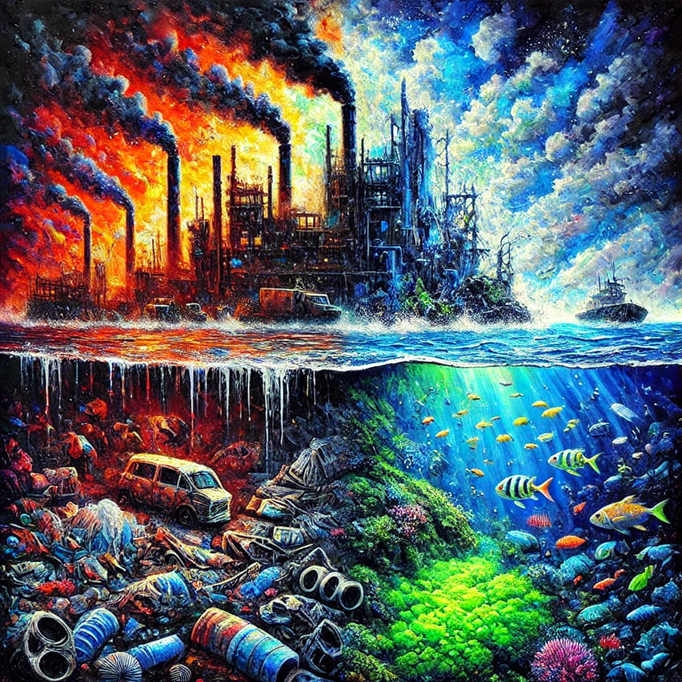
A deep, everlasting ocean surrounds a barren island. The ocean is hungry. It slowly eats away at the edges of the island, swallowing them under. The island is barren of natural landscapes and life, but it wasn’t always this way.
The island itself was once a large habitat, full of lush plant growth. Plants we’ve never seen, ones larger than life. Ones that were more responsive than we are or ever have been. Coral-reef castles reigned deep within the sea; they were empires. Monstrous fish patrolled the darkest and most distant caves. Land animals came to be, and they thrived. The kings of the jungles, the kings of the deserts, the kings of the meadows. Every being could be king, and the food chain could never be disturbed by those fragile dangers who had no idea what it even was, nor how they might be disturbing it. The ecosystem was naturally balanced, survival met supply and demand before any of these words were created, before English, before Latin, before. The animals took what they needed, and, in a cyclical way, replenished it. There were no people.
Then, there was humanity.
In the blink of an eye, we came and went.
This is what made the island barren. It didn’t look that way, though. Not after humans were done with it. It was devoid of life, sure. But from a distance, from a traveling eye, business was booming. The island was smothered in the electric hum of neon and grey soil chemically farmed to its full expendability. Clouds formed brutal acid rain, the only difference between the gray, polluted vapor formations and the rest of the thickening smog. The beaches were littered with our residue. Towards the end of our days, some just took a knee in the tide, were carried away by waves wrapped in plastic as if we were saving them for later. Even in the deepest, most uncharted waters, you could find the cap of a Coca-Cola bottle, a murky spindle of spilled oil, the frame of a ship, sunken steel.
The island is barren only at the end. After thousands of years of waiting for the wear-down of neon and smog and a million other things, it can sit barren.
Of course, nothing is final.
On the creaking steel bones of a discarded ship at the bottom of the sea, or on a bottom-dwelling rock, or maybe just suspended in the water, a fleck of algae will bloom. It will bloom and spread, and more will bloom, and more will spread.
How things will go from there, I do not know. The bitter awakening of an ice-age, the rebirth of dinosaurs, of some evolved humanoid, of fish. Or maybe it will die out to sit barren eternally. Peacefully.
This is where my speculation ends. And that’s all it is, speculation. We have the tools to prevent a future so aggressive and uncertain. We have a say in how long we will live here, in the presence or avoidance of mass-extinction. The earth doesn’t need saving. We do.

Take-Aways and Further Reading
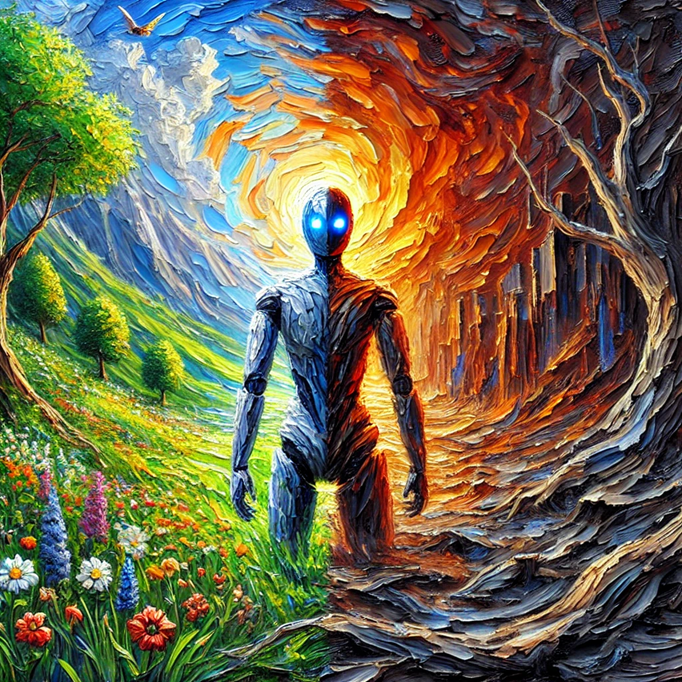
My goal with this piece was, once again, to make the reader imagine. We often hear big, broad goals for a distant future without actually thinking of what that distant future will mean to us. Although this piece is dramatic and fictional, it does serve as a potential prediction on the future humanity has in store, with the island, of course, representing the earth as a whole. I also wanted to highlight the fact that saving the earth means saving us! The methodical destruction of the planet can and will have serious repercussions in our lifetime.
The good news is that there is still time. We can (and should) do everything in our power to change our ways for the better, even if that means a small step or two at a time.
Here are some of our articles promoting positive and sustainable changes you can make right now:
10 Powerful Ways to Promote Cultural Sustainability in Your Community
Solutions For Light Pollution Will Have You Seeing Stars
A New Leaf for Sustainability in Lawn Care – Green Villager



Leave a Reply