

In a world often dominated by dystopian narratives, Solarpunk emerges as a breath of fresh air, offering an optimistic vision of the future. But what exactly is Solarpunk?
Essence of Solarpunk
Solarpunk is more than just a genre; it’s a movement that envisions a sustainable future where technology and nature coexist harmoniously. It’s a hopeful response to the growing concerns about climate change, environmental degradation, and the unsustainable practices that have dominated industrial and post-industrial societies.
At its core, Solarpunk is about creating a world that leverages the power of renewable energy, particularly solar power, to build self-sustaining communities. It emphasizes ecological design, social justice, and the use of innovative technology to solve environmental challenges.
Key Principles of Solarpunk
- Sustainability: Solarpunk promotes the use of renewable energy sources like solar, wind, and hydro power. It advocates for reducing our carbon footprint and living within the means of our planet’s resources.
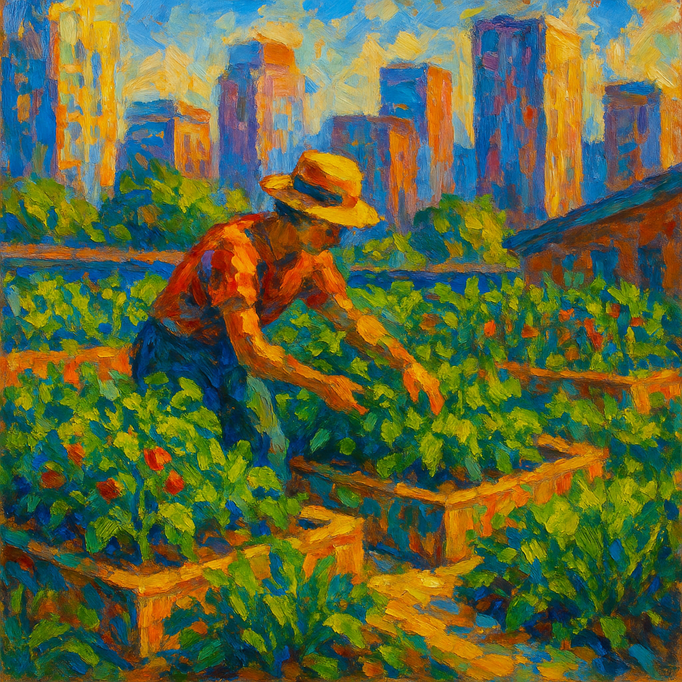
- Harmony with Nature: This movement encourages integrating natural elements into urban environments. Think green roofs, vertical gardens, and urban farming. The goal is to blur the lines between the natural and built environments.
- Innovative Technology: Solarpunk envisions the use of advanced technology to create sustainable solutions. This includes smart grids, energy-efficient buildings, and cutting-edge transportation systems that minimize environmental impact.
- Community and Social Justice: A Solarpunk society is one where communities thrive through cooperation and inclusivity. It emphasizes equitable distribution of resources and opportunities, ensuring that everyone benefits from technological advancements.
- Aesthetic and Culture: Visually, Solarpunk combines futuristic technology with natural beauty. Art and architecture in this genre often feature organic forms, bright colors, and an abundance of greenery. It’s a celebration of life and nature, infused with a hopeful outlook.

Real-World Applications
Solarpunk is not just theoretical; it’s being put into practice around the world. Here are some real-world examples:
- Earth-Sheltered Homes: These homes are built into the earth, providing natural insulation and reducing the need for heating and cooling. They are a perfect example of how Solarpunk principles can be applied to residential architecture.
- Urban Farming Initiatives: Cities like New York and Paris are embracing urban farming, turning unused spaces into lush gardens that provide fresh produce to local communities.
- Renewable Energy Projects: Countries like Germany and Denmark are leading the way in renewable energy adoption, demonstrating that a transition to a sustainable energy grid is possible and beneficial.
The Future of Solarpunk
As climate change and environmental issues become more pressing, the Solarpunk movement offers a hopeful alternative. It challenges us to rethink our relationship with the planet and inspires us to build a future where technology enhances rather than harms the natural world.
By embracing the principles of Solarpunk, we can create communities that are resilient, inclusive, and sustainable. It’s a vision of the future that’s not only possible but necessary if we are to thrive in the years to come.
Solarpunk is a beacon of hope in a world that often seems dark. It shows us that a better future is within our reach, one where we live in harmony with nature and each other. As more people and communities adopt Solarpunk principles, we move closer to making this optimistic vision a reality.
By embracing Solarpunk, we can inspire change and build a world that prioritizes sustainability, innovation, and social justice. It’s a future worth striving for, and one that we can start creating today.
Resources
A Solarpunk manifesto. (n.d.). Solarpunk. https://iandennismiller.github.io/solarpunk/manifesto/english.html
Solarpunk flag attribution: @Starwall@radical.town, CC BY-SA 4.0 https://creativecommons.org/licenses/by-sa/4.0, via Wikimedia Commons




Leave a Reply