
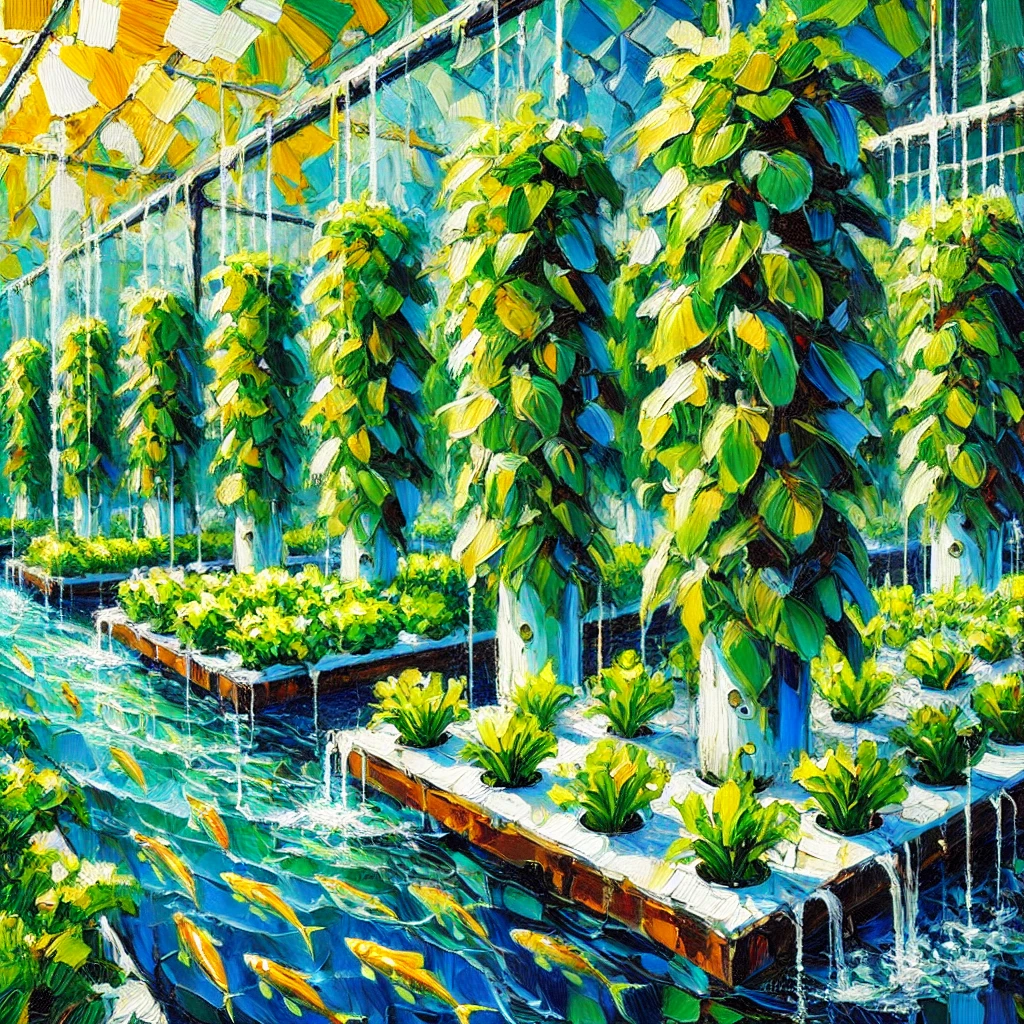
Traditional methods of agriculture have been garnering concern for decades, chiefly due to the colossal amount of damage that they inflict on our environment. Aquaponics can be extremely sustainable, cutting down on waste compared to the farming methods that most large-scale agricultural companies employ. Although aquaponics has been around for centuries, it has yet to take over in our post-industrial age. However, those pushing for sustainable farming see aquaponics as a viable and efficient solution to many of the problems we currently face. Let’s dive in:

What Is Aquaponics?
Aquaponics is a mix of aquaculture (the raising of aquatic animals in tanks) and hydroponics (cultivating plants in water with no use of traditional soil). Aquaculture tanks passively produce nutrient rich water from the waste of fish and other living creatures who are raised in these tanks. That water is then circulated through pipes to the roots of plants, which act as a filter for ammonia and other toxins that can harm the aquatic life. The water is then cleaned and oxygenated before being transported back to the tanks, completing the circuit. Aquaponics capitalizes on a natural, symbiotic relationship between flora and fauna.
The size of an aquaponics setup can certainly vary. High schoolers in science research programs make aquaponics circuits that can fit on the top of their desk. There are also large-scale greenhouses entirely sustained by aquaponics, which output sizeable amounts of food and require daily maintenance and upkeep.
Then and Now
The loose concept of aquaponics can be traced back centuries to the Aztecs, who used rafts to farm on the surface of a lake in around 1000 AD. They locked in on the idea of crop fertilization through lake waste and used it to the advantage of their then-thriving society. These floating gardens prove that they had adept knowledge of the nitrogen cycle in natural bodies of water before anyone else.

Aquaculture (the captive raising of aquatic animals) was originally done in ponds. This requires land and wastes water. Recirculating Aquaculture Systems (RAS) were adapted to combat these issues. RAS systems were first used to research ideal plants and animals for efficient growth, water purity, and more. This research originally took off in the 1970s. By the early 2000s, commercial aquaponics operations using the RAS system began to pop up. Nowadays, the use of the RAS system is thriving for research, crop growth, and more.
Types of Aquaponics Systems
- Nutrient Film Technique (NFT)
- This type of system uses perforated squared pipes to allow the nutrient-rich water from aquaculture tanks to lightly stream over the roots of plants.
- This system was invented in 1965.
- Deep Water Culture (DWC)
- In this system, plants are placed on floating rafts in the aquaculture tanks to maintain consistent nutritional flow.
- The roots of the plants must be potted with media like rockwool or coco for extra support, due to the fact that they are constantly submerged.
- This system is most similar to the original Aztec technique.
- Media-Based Grow Beds
- This system uses a trough filled with substrate like sand or gravel to support the roots of plants.
- This system does a proficient job of filtering the water, eliminating the need for a separate biofilter within the circuit.

A Promising Future Ahead
Many sustainable growers have adapted aquaponics as their primary farming technique. Let’s explore why:
- When compared to traditional farming, aquaponics reduces water use by up to 90%.
- Aquaponics doesn’t require arable land, meaning it can work anywhere on the globe including empty warehouses or rooftops in largely populated areas.
- Farming using aquaponics takes up significantly less space than traditional methods.
- The relationship cultivated by aquaponics mimics that of a natural, healthy ecosystem.
Although we may never see aquaponics adapted on an international, world-feeding scale, it does provide much-needed efficiency and sustainability to many growers. If this interests you, check your local farmers’ market for produce or fish grown with aquaponics. You could even buy or create a small-scale aquaponics system at home! Support the cause of sustainable farming, one purchase at a time.






Leave a Reply